
How to Keep Your Garage Cool This Summer in PA, MD & DE
An uninsulated garage in Pennsylvania, Maryland, or Delaware can reach 110–115°F on a 95°F summer day. The most effective way to keep it cool is to combine quick fixes—ventilation, sealing, and decluttering—with longer-term investments like insulation and, if needed, a ductless mini-split system.
Summer in the Mid-Atlantic hits hard. Maryland averages 30 to 40 days above 90°F in central areas, and relative humidity in the region climbs to around 75% by August. Pennsylvania and Delaware aren’t far behind. When that heat builds up outside, your garage takes the worst of it.
At Veteran Garage Doors, we’ve worked with thousands of homeowners across Pennsylvania, Maryland, and Delaware. One of the most common complaints we hear this time of year? A garage that’s become completely unusable. Too hot to park in, too hot to work in, and hot enough to damage whatever you’ve stored inside.
The good news: most of the problem is fixable. Here’s what we recommend, from the easiest zero-cost steps to the more permanent solutions worth investing in.
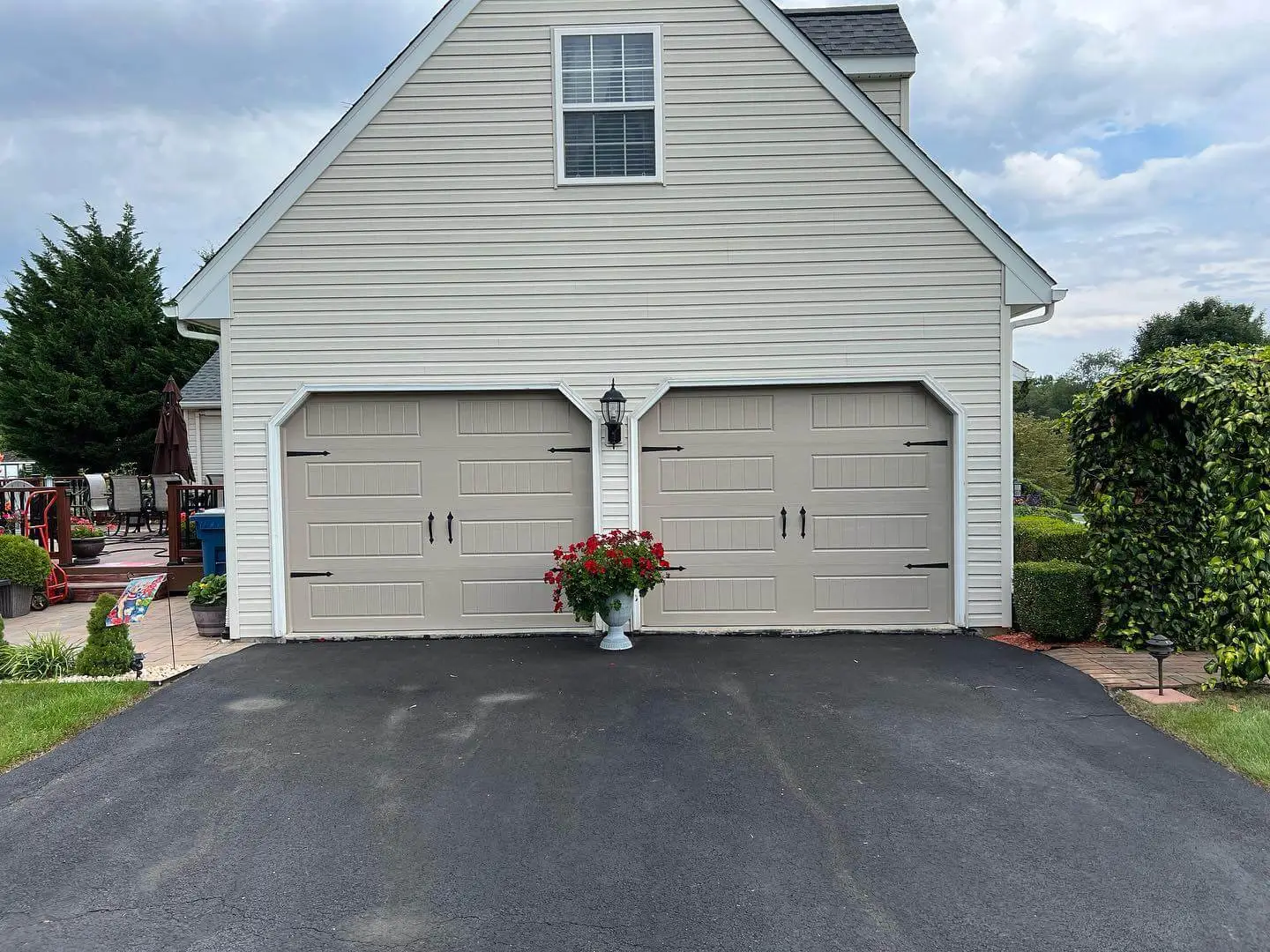
Why Does a Garage Get So Hot?
Before spending money on fixes, understand what’s driving the heat. According to The Garage Guide, an uninsulated garage can run 10 to 18°F hotter than the outside temperature on a sunny day. That means when it’s 95°F outside, your garage can hit 110 to 115°F inside.
Several things cause that spike:
- No insulation in the walls or ceiling, which lets heat transfer directly through the structure
- An uninsulated garage door that acts like a radiator when hit by direct sun
- Poor or zero ventilation, trapping hot air with nowhere to escape
- A dark-colored door or roof, which absorbs up to 90% of solar radiation
- A freshly parked car, which radiates engine and exhaust heat for one to two hours after you turn it off
Most garages have three or four of these problems at once. Fix even one or two and you’ll notice a real difference.
Immediate Actions: Quick Cooling Strategies
Start here. These cost nothing and can drop your garage temperature by 5 to 15°F depending on conditions.
- Open the door at the right time. Crack the garage door during early morning or evening hours, before 10 a.m. or after 7 p.m. when outside air is cooler than the air trapped inside. If you have a side door or window, open both to create cross-ventilation.
- Let your car cool down outside. A car driven on a hot day radiates heat from the engine, exhaust, brakes, and body panels for one to two hours after parking. Park it outside until it cools before pulling into the garage.
- Use fans strategically. A fan doesn’t lower the actual air temperature, but it creates a windchill effect that makes you feel 5 to 10°F cooler while working. Position a high-velocity fan to blow directly on your workspace, or aim one toward the ceiling to push hot rising air toward a vent.
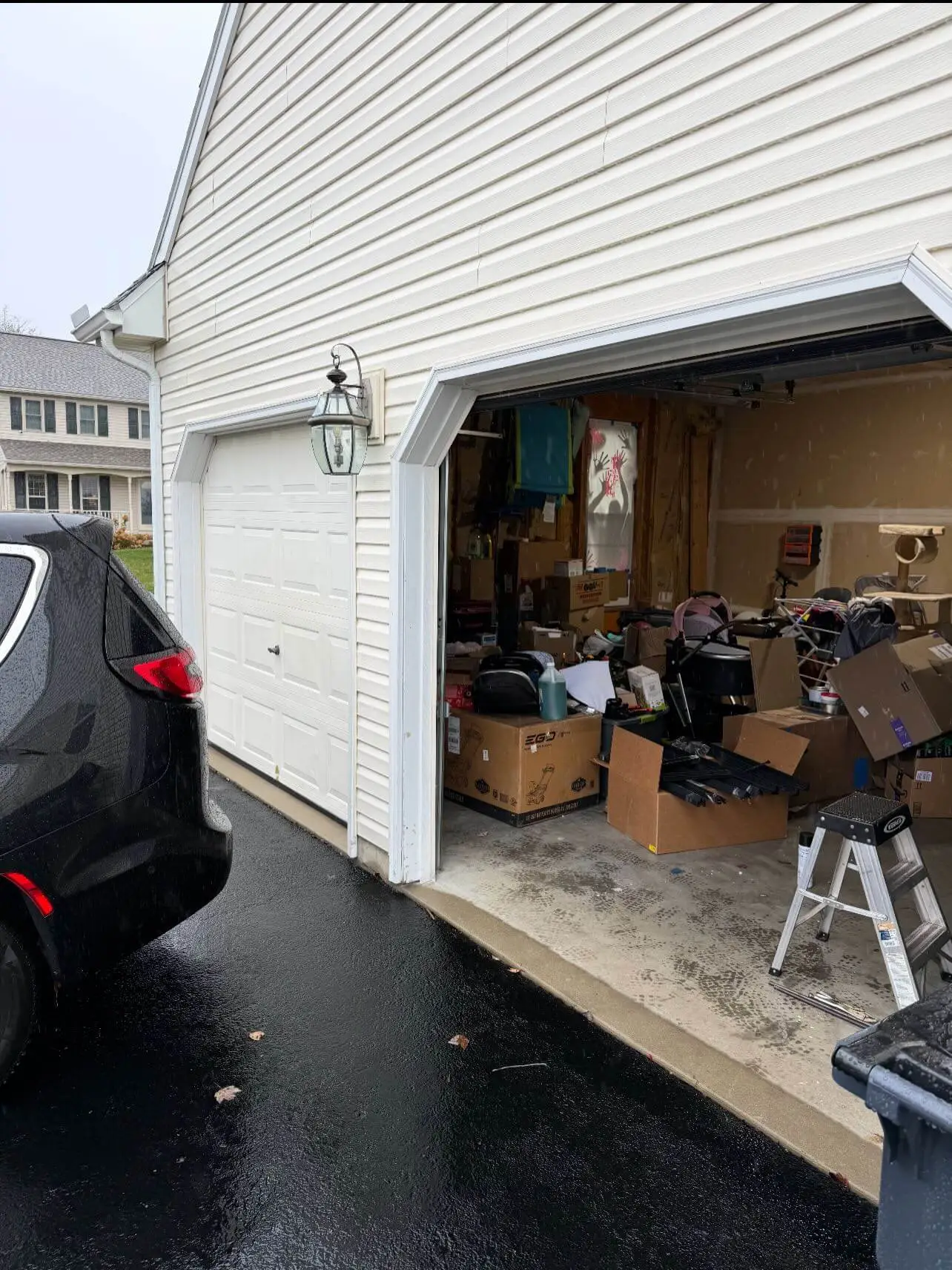
- Declutter the space. Boxes stacked against walls and gear piled in corners trap heat pockets and block airflow. Clear a path around the perimeter. Every other cooling method works better when air can actually move.
Sealing and Protection: Stop Heat Before It Enters
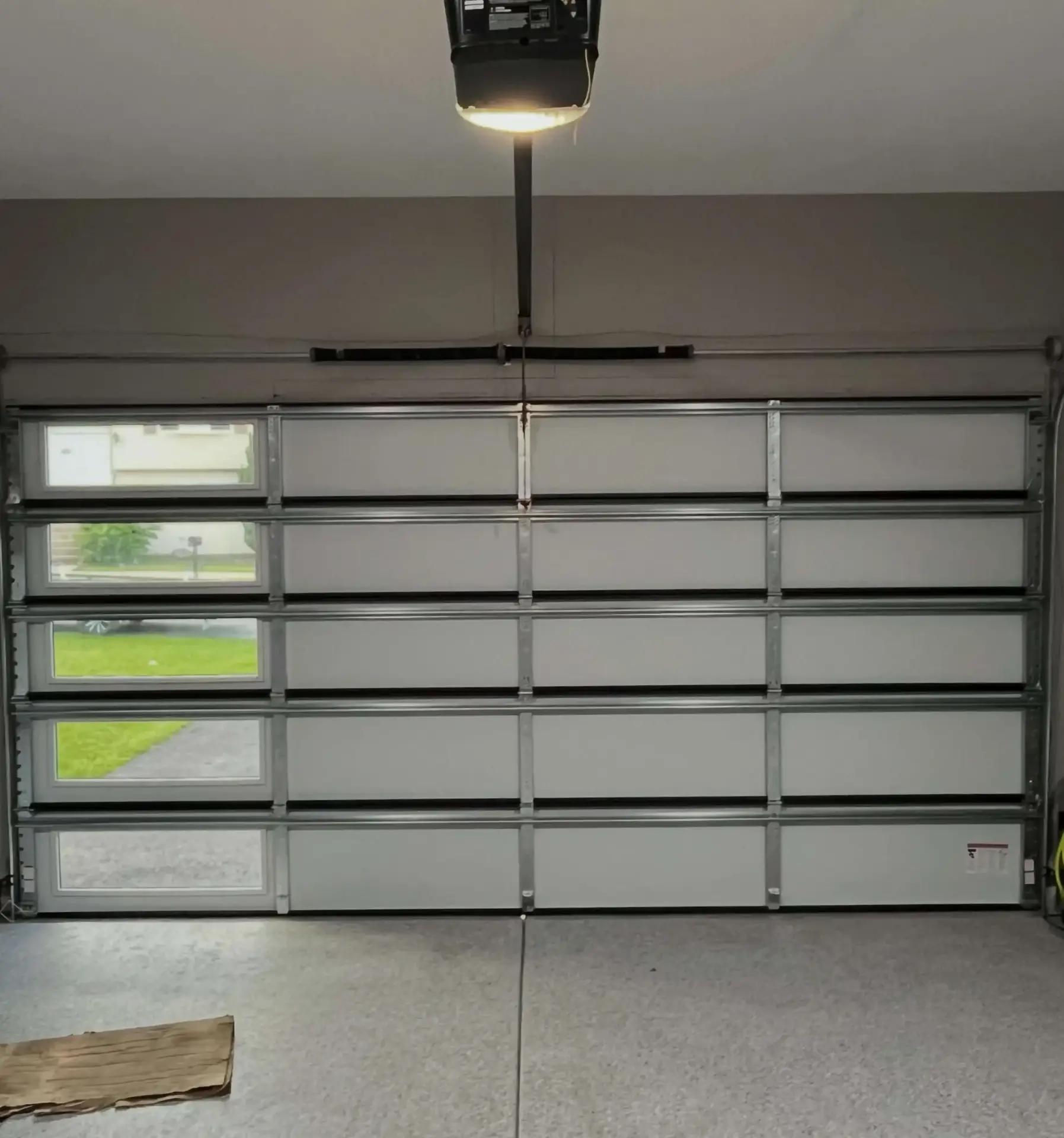
If hot air is getting in through gaps you can see, you’re fighting an uphill battle. Check the bottom seal, side seals, and top seal of your garage door. If daylight is visible around the edges, hot air is pouring through.
- Weatherstripping and door seals cost $20 to $75 for a complete kit and take an afternoon to install.
- Caulk around windows and any wall openings. Silicone caulk creates a durable seal that handles temperature swings well.
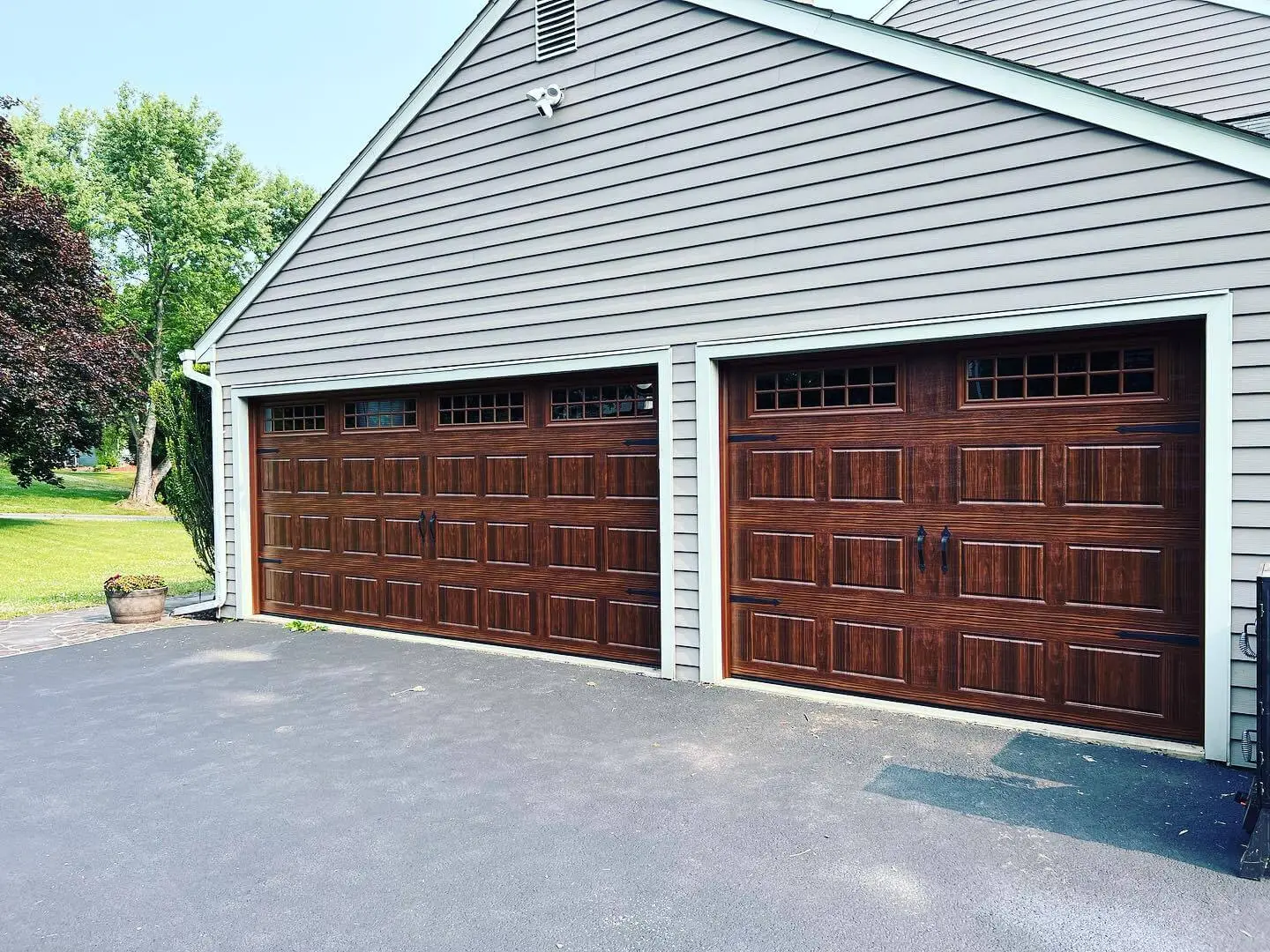
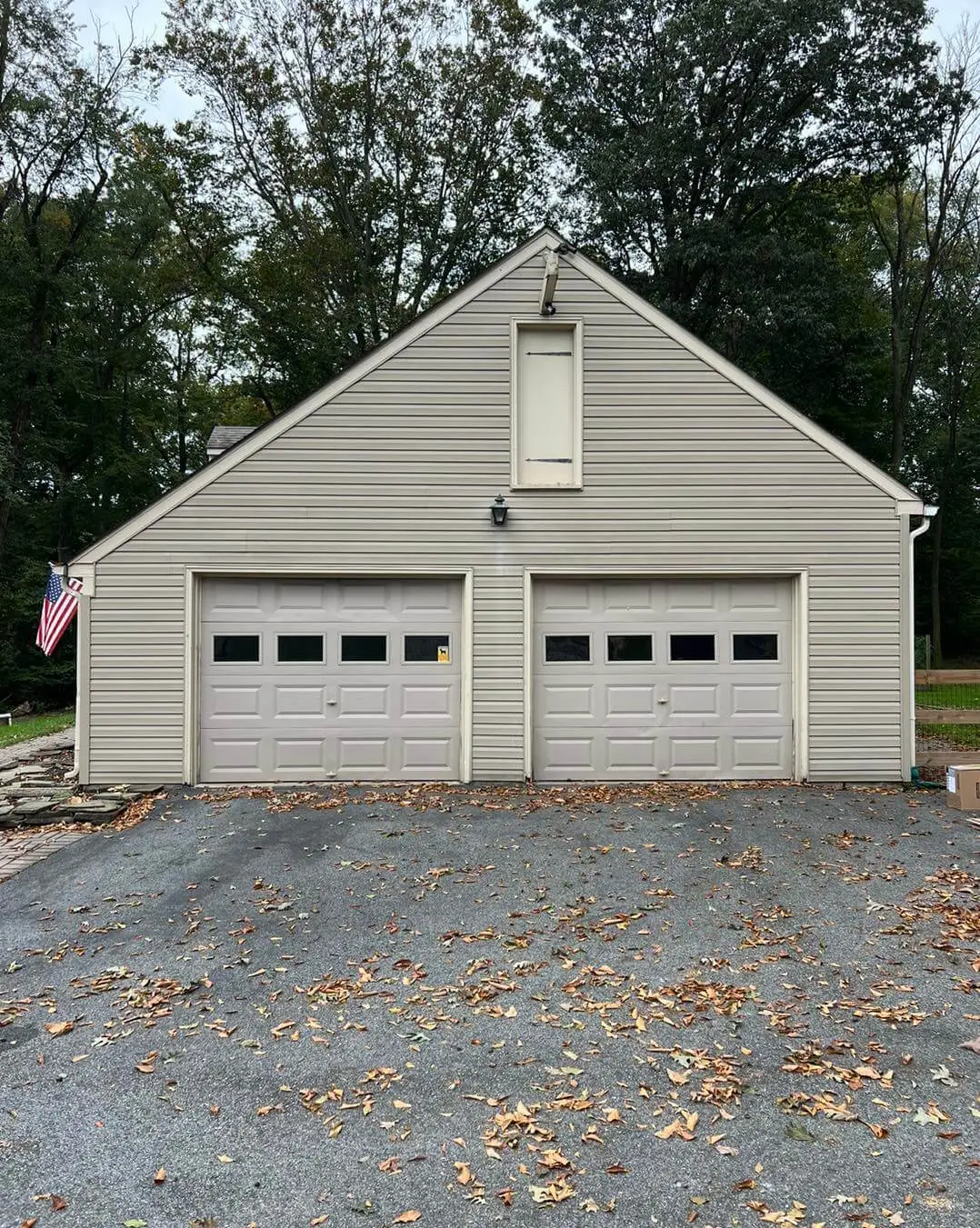
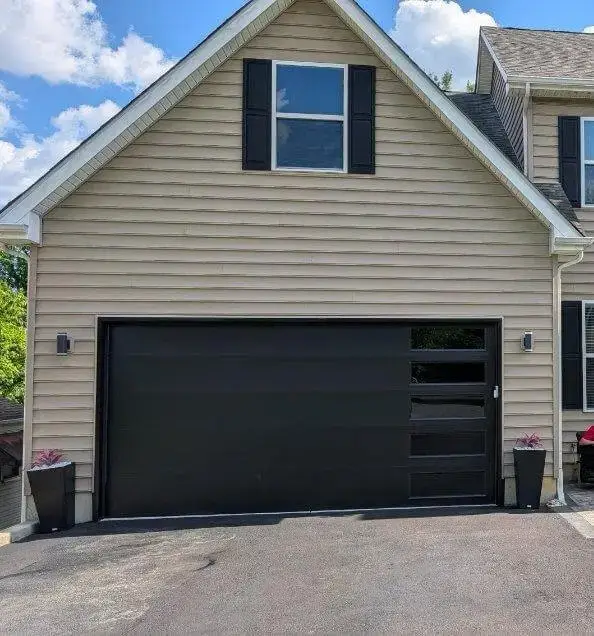
- Consider your door color. A dark garage door absorbs up to 90% of solar radiation. Repainting it white, beige, or light gray can reduce door surface temperature by 20 to 40°F on a sunny day and reflect 50 to 70% of incoming solar energy instead of absorbing it.
Ventilation Solutions: Keep Air Moving
Sealing keeps hot air out. Ventilation pushes it out. You need both.
- Install a powered exhaust vent or gable fan ($100–$400). Mounted high on the wall, it actively pulls hot air out of the garage. A thermostat-controlled model turns on automatically when the temperature hits a set point. Pair it with an intake vent low on the opposite wall for maximum airflow. This setup can reduce garage temperature by 10 to 20°F.
- Add roof vents. Ridge vents at the peak of the roof release hot air passively, no electricity required. This is especially effective if your garage has an attic space above it where heat accumulates.
- Use window fans to draw in cool night air. Position one to pull cool air in from one side while pushing warm air out the other.
Insulation: The Long-Term Solution
Ventilation and sealing help. Insulation is what actually holds the gains.
The EPA estimates that air sealing and insulation together can save an average of 15% on heating and cooling costs. For an attached garage, the benefits extend into your home—a hot garage wall transfers heat directly into whatever room is adjacent to it, making your home’s air conditioner work harder all day.
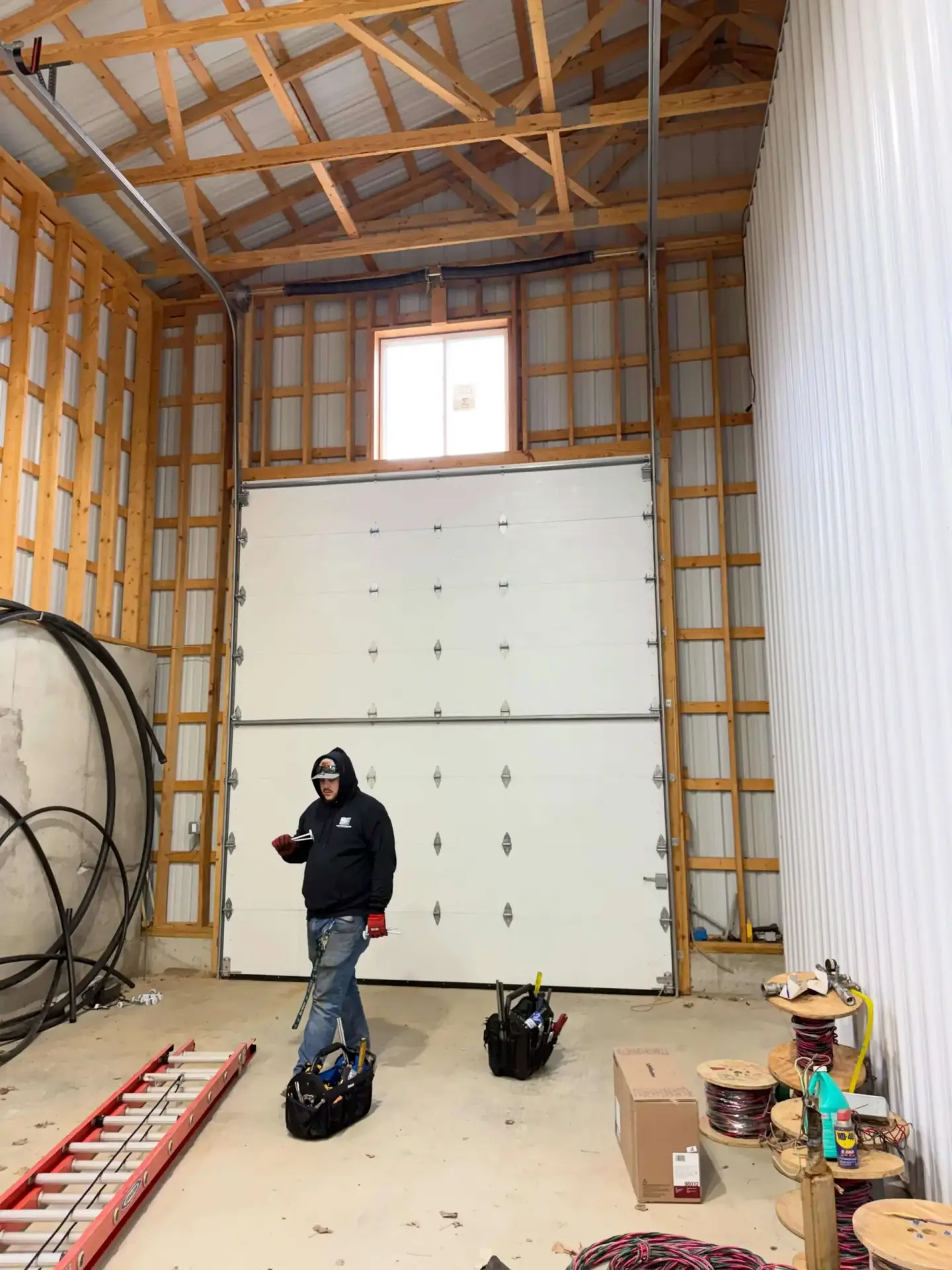
Garage door insulation is the most impactful single upgrade for most homeowners. A foam insulation kit ($50–$150) cuts heat transfer through an uninsulated steel door by 50 to 70%. If your door is aging or structurally compromised, upgrading to a new factory-insulated door is often the smarter investment—insulated garage doors carry R-values ranging from R-6 to R-18, with higher values providing better thermal resistance.
Wall and ceiling insulation ($500–$2,000 professionally installed) reduces garage temperature by 10 to 20°F in summer and makes every other cooling method more effective. Fiberglass batt insulation works well for unfinished walls. Rigid foam board is a strong option for ceilings.
If your garage has an attic above it, a radiant barrier on the ceiling ($100–$300) reflects up to 97% of radiant heat and can reduce attic temperature by 20 to 30°F translating to a measurable drop in the garage below.
Exterior Shading: Block the Sun Before It Reaches the Door
You can take the heat off before it ever touches your garage.
- Awnings above garage doors and windows block direct afternoon sunlight and reduce heat absorption through walls and doors.
- Strategic tree planting is a longer-term play, but research cited by the U.S. Department of Energy shows that a single tree can reduce surrounding temperatures by up to 25°F. In the Mid-Atlantic, deciduous trees work best, they cast heavy shade in summer and let warmth through in winter after the leaves drop.
Advanced Cooling: When the Basics Aren't Enough
If you’ve worked through ventilation, sealing, and insulation and the garage is still uncomfortable, air conditioning is the next step.
A ductless mini-split system ($2,000–$5,000 installed) is the most effective permanent solution. It provides both cooling and heating, runs quietly, and is the most energy-efficient option—Lennox reports that a mini-split can save up to 63% on energy costs compared to a traditional central AC system. Unlike window units or portable ACs, a mini-split doesn’t require existing ductwork and delivers consistent temperature control year-round. It also pulls double duty in winter, which matters in Pennsylvania, Maryland, and Delaware where winters are cold.
One honest note: air conditioning only works well in a garage that’s at least partially insulated. Installing a mini-split in a completely uninsulated space is like cooling a room with all the windows open. Get the insulation right first.
A dehumidifier is worth adding as well, especially for Mid-Atlantic summers where humidity makes heat feel significantly worse. Removing moisture from the air drops the perceived temperature and protects tools, wood, and valuables from rust, warping, and mold.
When Should You Call a Professional?
Some of this work is straightforward DIY. Other parts aren’t.
Call a professional when:
- Persistent drafts or air leaks suggest a structural or sealing problem you can’t identify on your own
- You’re considering a new insulated garage door and want a precise fit and proper installation
- You need a powered ventilation system wired in safely
- You’re ready to install a ductless mini-split, which requires a licensed HVAC technician
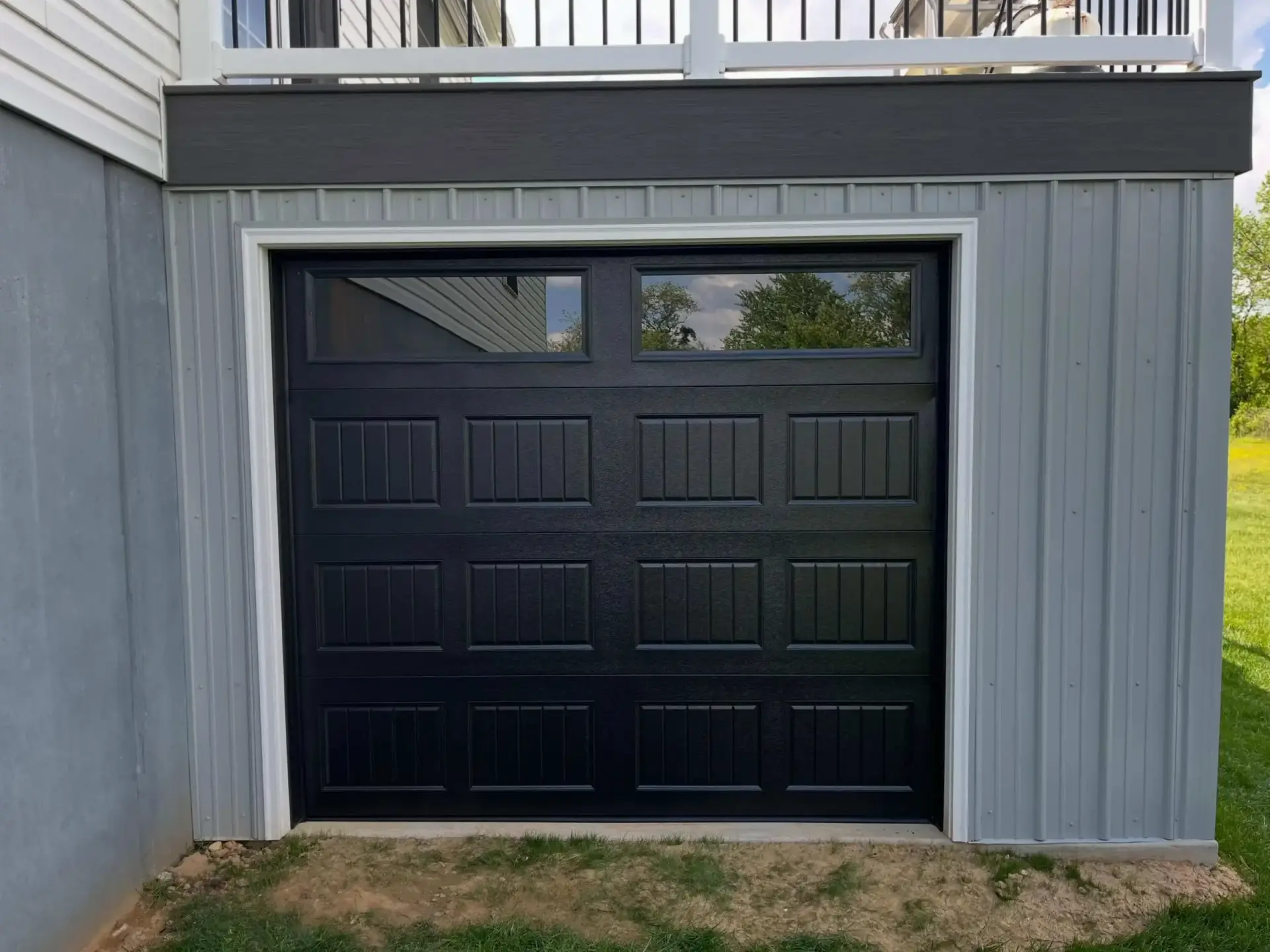
Getting the install right the first time matters. A garage door with gaps because it was installed poorly defeats the purpose of buying an insulated one.

Start With What You Can Do Today
You don’t have to solve every problem at once. Open the door in the morning. Let your car cool outside. Add a fan. Then seal the gaps, improve ventilation, and insulate when you’re ready to invest in a more permanent fix.
At Veteran Garage Doors, we help homeowners across Pennsylvania, Maryland, and Delaware get their garages working the way they should. Sealed, insulated, and built to handle the seasons. If your garage door is part of the problem, we can help you fix it. Reach out and we’ll take a look.
Ready to Reclaim Your Ceiling?
LiftMaster side-mount openers give you back your overhead space, operate nearly silently, and come packed with smart features that make your garage easier and safer to use every day. The 98022MC handles most residential doors. The 98032MC handles the heavy ones. Both are backed by LiftMaster’s lifetime motor warranty and installed by a team that does this work properly.
Call Veteran Overhead Garage Doors at (484) 680-9065 to schedule a consultation or get a quote. We’ll assess your garage, recommend the right model, and have you up and running fast.
Your ceiling has better things to do than hold a motor.
Serving Pennsylvania, Delaware, & Maryland With Premium Garage Door Services
Email: chris@veterandoor.com
Frequently Asked Questions (FAQ)
How hot can a garage get in Pennsylvania, Maryland, or Delaware in the summer?
An uninsulated garage in the Mid-Atlantic can reach 110 to 115°F on a day when the outside temperature hits 95°F. That’s because uninsulated walls, a metal door in direct sun, and poor ventilation can add 10 to 18°F above the outdoor temperature, according to The Garage Guide. Maryland also sees 30 to 40 days above 90°F in central areas each summer, with humidity levels around 75% in August, which makes it feel even hotter inside.
What is the cheapest way to cool a garage in the summer?
The cheapest fixes are free: open the garage door during early morning or evening hours to flush out trapped heat, let your car cool outside before parking it, and declutter to improve airflow. Adding a high-velocity shop fan costs $30 to $60 and makes working inside noticeably more comfortable. For a more lasting low-cost fix, install a garage door insulation kit ($50–$150) and replace worn weatherstripping ($20–$75).
Is it worth insulating a garage door in a hot climate like the Mid-Atlantic?
Yes. A foam garage door insulation kit cuts heat transfer through an uninsulated metal door by 50 to 70%. For a door that spends hours in direct afternoon sun, that’s a significant difference in how hot your garage gets. If your door is older or damaged, upgrading to a factory-insulated door with an R-value of R-6 or higher is a better long-term investment.
What type of air conditioner works best for a garage?
A ductless mini-split system is the best permanent option. It cools and heats, runs efficiently, and doesn’t require ductwork. Lennox reports energy savings of up to 63% compared to traditional central AC systems. A window AC unit ($150–$400) is a more affordable alternative if your garage has a window. Avoid relying on a portable AC unit in an uninsulated garage—without proper insulation, the unit has to work too hard and delivers poor results.
Can improving garage temperature also help reduce home energy bills?
Yes. If your garage shares a wall with your home, heat transfers through that wall and forces your home’s air conditioning to work harder. The EPA estimates that proper air sealing and insulation can reduce heating and cooling costs by an average of 15%. Cooling your garage reduces the thermal load on your entire home.
When should I call a garage door professional instead of doing it myself?
Call a professional if you can’t identify where air is leaking in, if your garage door doesn’t seal evenly at the bottom or sides, or if you’re ready to install a new insulated door. Proper installation is critical, a door with poor alignment or gaps defeats the purpose of buying an insulated model. A garage door professional can also assess whether your current door is worth insulating or whether a replacement makes more financial sense.